

US economy faces recession if oil prices remain near $140 per barrel for the majority of the year
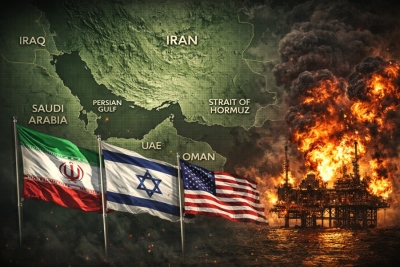
The surge in prices caused by US and Israeli attacks on Iran is increasing economic pressure on American consumers, despite efforts by US President Donald Trump to frame the war as a success. On Wednesday, Trump declared that "we won—within the first hour, it was all over." However, the Strait of Hormuz remains closed, halting the flow of oil from the Persian Gulf, while Iran continues to target vessels and warns that oil prices could reach $200 per barrel. Oil prices surpassed $100 per barrel on Sunday and rose again during the week. The extent of the economic burden on consumers will depend primarily on the duration of the war and how quickly tankers can return to the Strait of Hormuz. Rachel Ziemba, a senior fellow at the Center for a New American Security, noted that if the conflict is prolonged, prices will remain high and highly volatile for consumers. Conversely, if the war ends quickly with a stable agreement, prices could normalize relatively fast.
Recession risk and energy shock
If the war lasts longer than a few weeks, many analysts warn that the US economy could face severe consequences, such as 1970s-style stagflation or even a full-scale recession. The International Energy Agency (IEA) stated in a report that the war in the Middle East is creating the largest disruption to oil supply in the history of the global market. Sam Ori, director of the Energy Policy Institute at the University of Chicago, explained that in the past, when oil prices reached 4% to 5% of GDP and remained elevated, it almost always led to a recession. While the US may not hit that threshold as quickly as it did in the 1970s—when the economy was more dependent on imported oil—Ori suggests a recession is likely if prices stay near $140 per barrel for most of the year. Furthermore, if the Strait of Hormuz remains blocked for an extended period, the economic fallout could materialize much faster. Ori noted that a six-month closure was previously deemed impossible, often described as "too big to fail," but recent events have shaken that certainty. The Persian Gulf provides over one-fifth of the global oil supply via the strait.
Rising fuel and consumer goods prices
The war has already led to an increase in gasoline prices across the United States. Patrick DeHaan, head of petroleum analysis at GasBuddy, told Al Jazeera that the national average reached $3.59 per gallon, up 65 cents since February. The sharpest increases are occurring near the coasts, where US supplies of gasoline, diesel, and jet fuel can more easily be diverted to the international market. If the conflict ends, prices could drop within weeks; however, every week the war continues could add another 25 to 40 cents to the price of gasoline. Robert Rogowsky, a professor at Georgetown University, noted that lower-income citizens will pay the highest price for this inflationary burst. Additionally, the continuation of the war is expected to drive up the cost of various consumer goods. Peter Sand, chief analyst at Xeneta, stated that the blockage in the Strait of Hormuz has already caused congestion in ports worldwide, which will eventually lead to delivery delays and further price hikes.
Risks to industry, agriculture, and technology
The continuation of the war means that the Red Sea, which was largely closed in 2025 due to Houthi attacks, will likely remain closed through 2026. Reopening it was expected to lower transport costs and product prices. Petroleum products from the Persian Gulf are used directly in the production of plastics, pharmaceuticals, and fertilizers; current shortages may lead to higher prices later. Regional fertilizers are essential for spring crops, and supply delays could even impact next year's harvests. Furthermore, a potential shortage of helium from the Persian Gulf could disrupt semiconductor manufacturing, causing delays in the production of automobiles and other industrial goods.
The stagflation nightmare
Rising prices are increasing the risk of stagflation—a combination of low economic growth, high unemployment, and high inflation. This is exactly what happened to the US economy following the oil shocks of the 1970s. Severin Borenstein of the Energy Institute at UC Berkeley warned of a real fear of returning to similar conditions. Stagflation creates a massive dilemma for the Federal Reserve, as its primary tools—raising or lowering interest rates—address different problems. Lowering rates could boost the economy but fuel inflation, while raising them could curb inflation but stifle economic activity and employment. Already, mortgage rates have climbed from 5.99% in late February to 6.29% as of March 12.
The long-term cost of war
Even if the war ends soon, its economic consequences may accelerate deep geopolitical and economic shifts. Rogowsky argued that the US attacks on Iran act as an "adrenaline shot" to an already evolving realignment of the global economy, as many middle powers seek to reduce their reliance on the United States. Finally, Heidi Peltier from the Costs of War project at Brown University warned that wars create long-term fiscal burdens, such as debt interest and veterans' care costs. The United States has already paid at least $1 trillion in interest for the wars in Iraq and Afghanistan. Peltier emphasized that military spending typically creates fewer jobs than investments in sectors like education or healthcare, raising the question: if money is spent on war, which sectors of the economy are ultimately left without investment.
www.bankingnews.gr






Σχόλια αναγνωστών